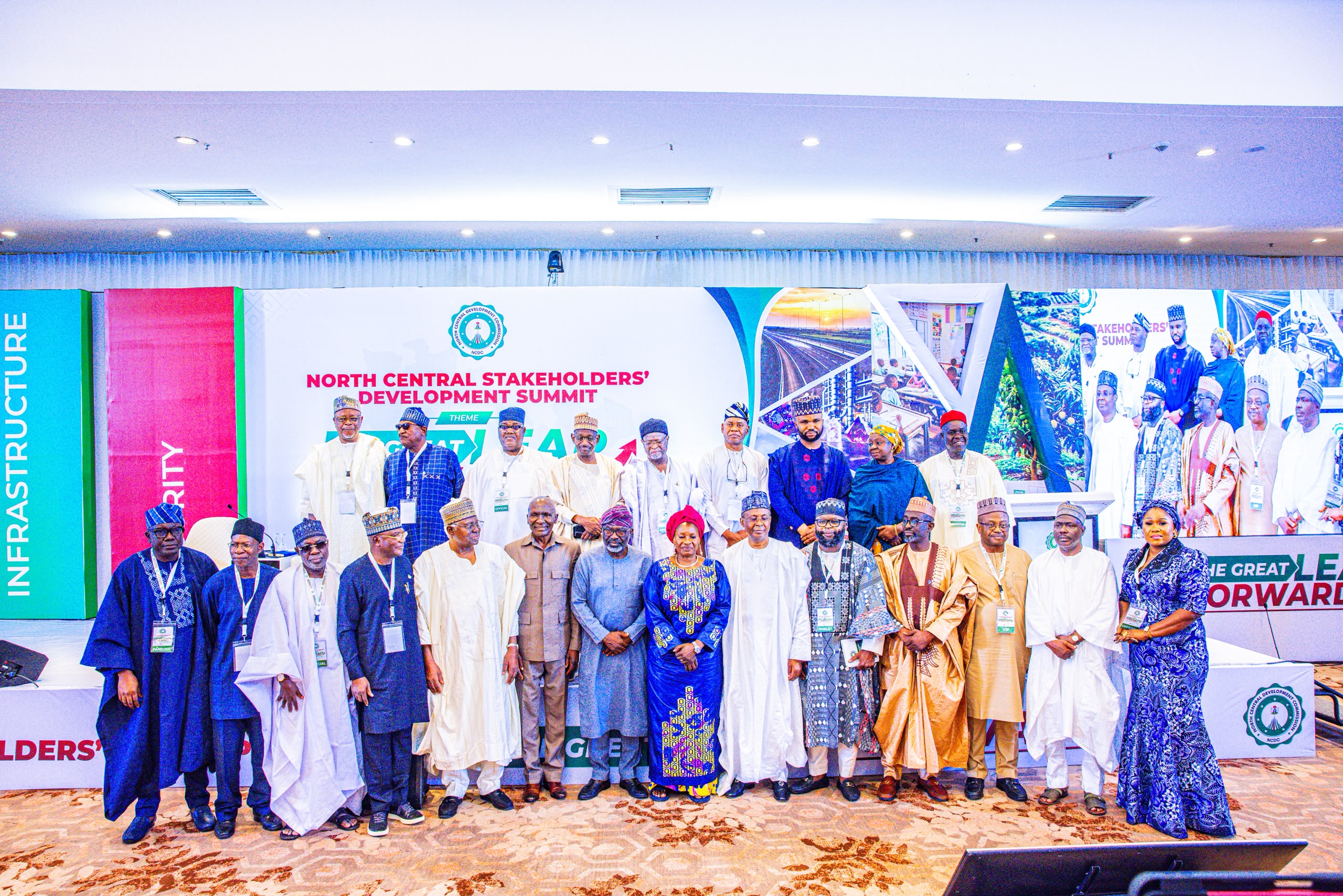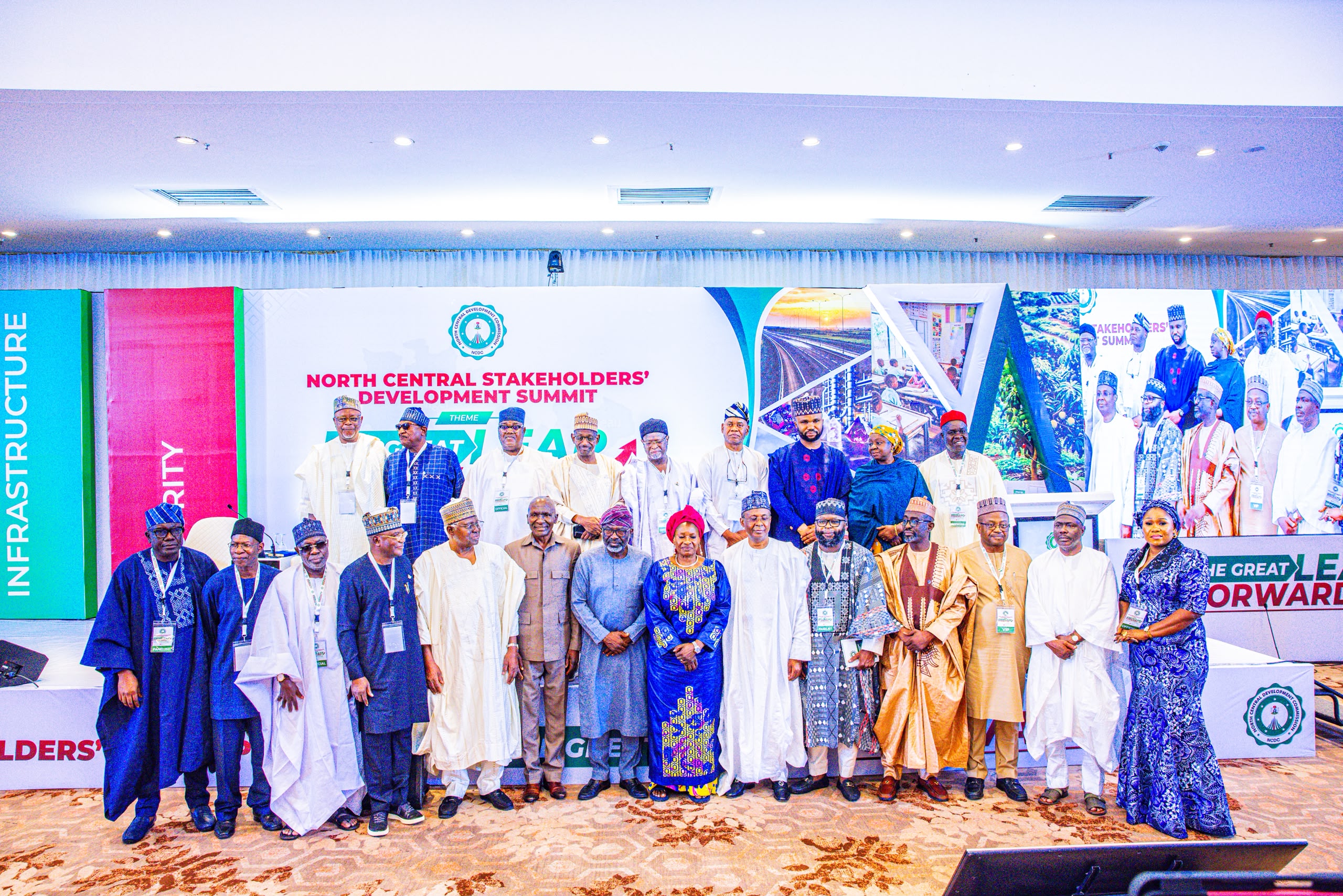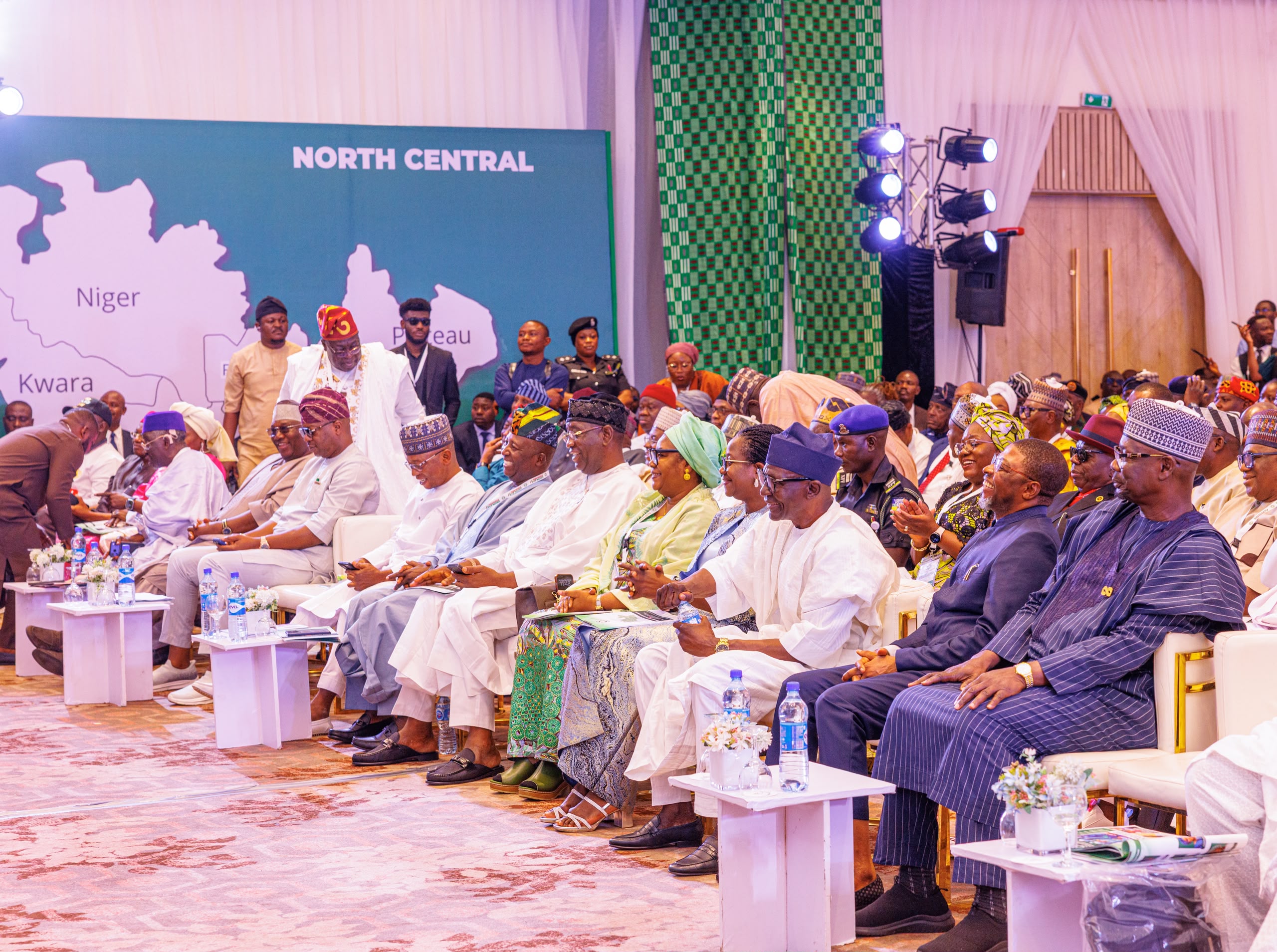
COMMUNIQUÉ Issued at the end of the NCDC Road Map and Stakeholders' Development Summit
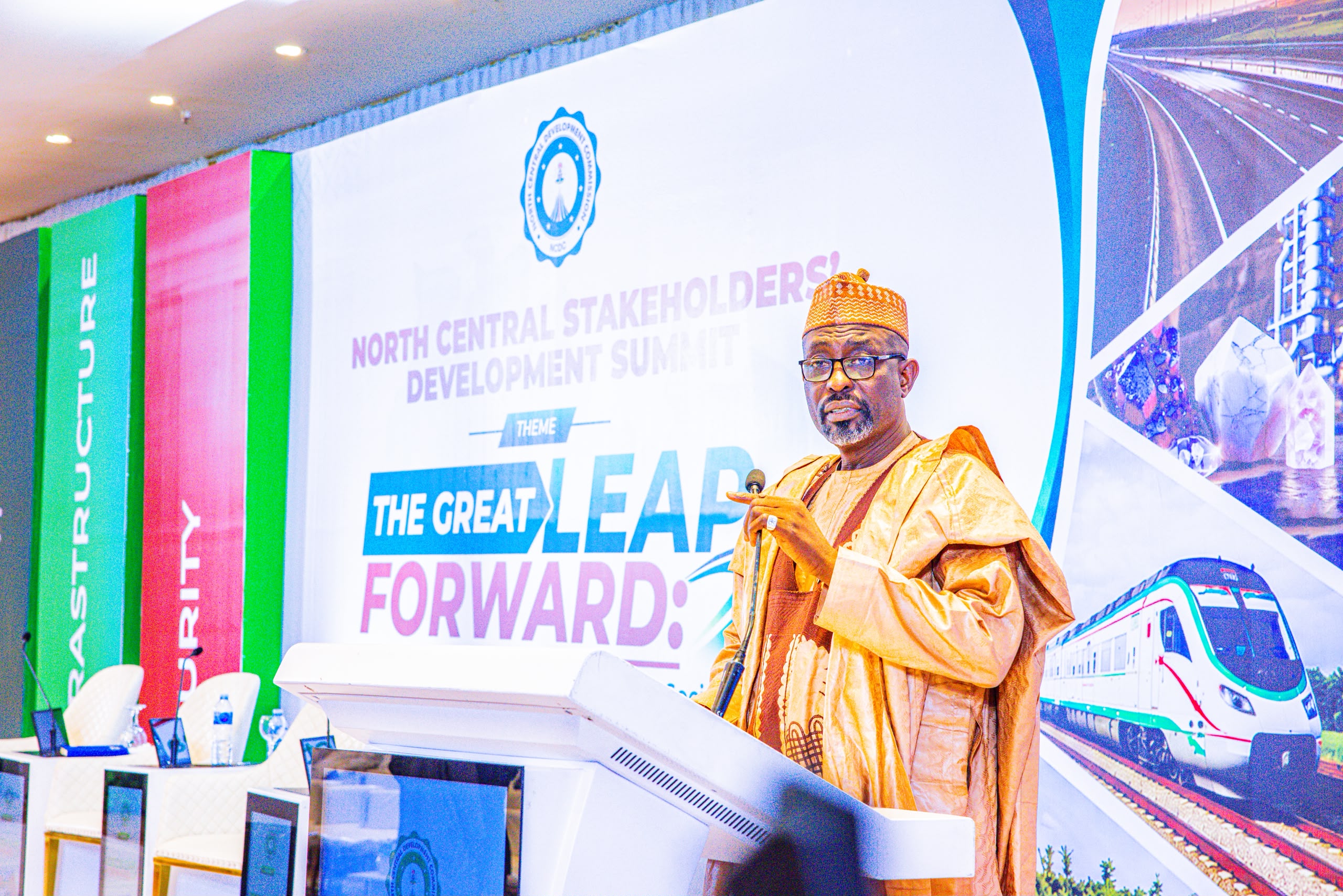
This Communique was presented by Prof. Mohammed B. Nuhu and adopted by participants at the close of the NCDC Road Map and Stakeholders' Development Summit on Tuesday, 15 September 2026, in Abuja.
Lead Summary
This Communique was presented by Prof. Mohammed B. Nuhu and adopted by participants at the close of the NCDC Road Map and Stakeholders' Development Summit on Tuesday, 15 September 2026, in Abuja.
Main Story
Newsroom Report
COMMUNIQUÉ Issued at the end of the NCDC Road Map and Stakeholders' Development Summit Theme: The Great Leap Forward: A 20-Year Economic, Infrastructural and Social Development Plan for the North Central Region Venue: Abuja Continental Hotel, Abuja Date: 14–15 September 2026 1. Preamble 1.
1 The North Central Development Commission convened its Road Map and Stakeholders' Development Summit at the Abuja Continental Hotel, Abuja, from 14 to 15 September 2026 under the theme, “The Great Leap Forward: A 20-Year Economic, Infrastructural and Social Development Plan for the North Central Region. ” 1.
2 The Summit presented the draft North Central 20-Year Development Plan 2027–2046 for stakeholder review, tested its strategic priorities against regional realities, and sought broad ownership of a long-term pathway for transforming Benue, Kogi, Kwara, Nasarawa, Niger and Plateau States and the Federal Capital Territory into a more productive, connected, inclusive, secure, resilient and digitally enabled region. 1.
3 Participation registered 862 physical attendees and 49 online attendees, with breakout sessions recording between 159 and 239 attendees during the two-day summit. Participants included representatives of the Federal Government, Governors of the Mandate States and the Federal Capital Territory, members of the National Assembly, traditional and religious leaders, public institutions, development partners, the private sector, academia, civil society, youth and women groups, professional bodies and the media.
2. Opening Ceremony 2.
1 The Managing Director and Chief Executive Officer of the NCDC, Dr Cyril Yiltsen Tsenyil, welcomed participants and positioned the Summit as the beginning of an inclusive, evidence-led and implementation-focused development journey for the North Central region. 2.
2 The new NCDC logo was unveiled as a symbol of unity, continuity, national purpose and the collective transformation of the six Mandate States and the Federal Capital Territory. 2.
3 In his keynote address, Sen. Amb.
Prof. Iyorwuese Hagher called on the region to convert its historic contributions, strategic location, diversity, natural resources and human capital into shared prosperity.
He urged the NCDC to function as the strategic coordinating institution for an integrated regional economy and emphasised peace, value addition, human capital, technology, regional unity and disciplined implementation. 2.
4 The Executive Governor of Nasarawa State and Chairman of the North Central Governors' Forum, Engr. Abdullahi A.
Sule, CON, underscored the region's agricultural and mineral potential, the importance of processing resources within the region, and the need for leaders who can translate plans into measurable results. He formally presented the draft 20-Year Plan.
2. 5 Speaking on behalf of the President, the Secretary to the Government of the Federation, Sen.
Dr George Akume, commended the consultative process, endorsed the long-term planning approach and called for high-impact, realistic and fundable interventions supported by strong governance, accountability, diversified financing and effective implementation. 2.
6 The Chairmen of the Senate and House Committees on the NCDC affirmed the National Assembly's commitment to legislative support, budgetary provision and oversight, while stressing that the Plan must lead to visible infrastructure, jobs, functional public services and better livelihoods. 2.
7 The Minister of State for Regional Development stated that the Summit's outcomes would inform the emerging national regional development framework and emphasised collaboration among the NCDC, state governments, the private sector and development partners. 3.
General Observations The Summit noted that: 3. 1 The North Central region possesses extensive agricultural land, water, minerals, energy resources, human capital, markets and a strategic central location, but these assets have not yet been converted consistently into commensurate productivity, incomes, industrial capacity and social outcomes.
3. 2 Fragmented planning, weak inter-state connectivity, insecurity, infrastructure gaps, limited value addition, unreliable data and inconsistent implementation have constrained the region's capacity to operate as one economic system and attract investment at scale.
3. 3 Security is productive infrastructure: agriculture, trade, investment, education and community life cannot thrive where people, assets and transport corridors remain unsafe.
3. 4 The Plan must avoid becoming a catalogue of disconnected projects.
It should concentrate resources on a limited number of catalytic, region-wide programmes with clear baselines, accountable owners, viable financing, measurable outcomes and defined maintenance arrangements. 4.
Resolutions and Recommendations Following deliberations, the Summit resolved and recommended as follows: 4. 1 Economic Development 4.
1. 1 Develop a GIS-enabled regional economic database and undertake state-by-state mapping of comparative advantages, productive assets, land, farms, water, crops, minerals, infrastructure gaps and investment opportunities during the Foundation Horizon.
4. 1.
2 Build state-specific agricultural and livestock value chains around quality inputs, mechanisation, irrigation, farmer capability, storage, safe preservation, processing, packaging, branding, logistics and export, with priority projects sequenced into bankable quick wins. 4.
1. 3 Formalise and aggregate artisanal mining, strengthen environmental and operating standards, and develop mineral-processing and manufacturing clusters so that more value, employment and public revenue remain within the region.
4. 1.
4 Support MSME and industrial clusters through skills, aggregation, affordable finance, market access and practical investor incentives, while encouraging states to harmonise investor-friendly laws, establish land banks and package viable projects for domestic and foreign capital. 4.
1. 5 Position the NCDC principally as a regional coordinator, investment catalyst and enabler, while defining where direct intervention is justified and documenting the roles of governments, communities, investors and implementation partners.
4. 2 Infrastructure 4.
2. 1 Prepare and implement an integrated North Central infrastructure programme connecting the six states and the Federal Capital Territory through strategic roads, rail, inland waterways and logistics systems, beginning with the rehabilitation and completion of corridors that unlock agricultural land, markets and investment.
4. 2.
2 Give urgent consideration to high-impact regional corridors, including the Abuja-Lokoja Road, and assess the phased feasibility of regional rail, Baro inland-port logistics, dry-port connections and modernised freight systems. 4.
2. 3 Develop a practical regional energy programme based on feasible locations, technologies, financing and delivery phases, alongside improved public water supply, irrigation and resilient urban and rural infrastructure.
4. 2.
4 Integrate security, climate resilience, operations and maintenance into project design and financing, and involve qualified engineers, consultants and technical specialists throughout project identification, preparation and implementation. 4.
3 Social Development 4. 3.
1 Establish a disaggregated North Central human-capital and social-inclusion data system covering children, youth, women, persons with disabilities, indigent households and rural communities to guide needs-based interventions and track outcomes. 4.
3. 2 Implement a safe and inclusive education framework that reduces school dropout, strengthens existing schools, addresses teacher gaps, improves affordability and learning quality, and provides accessible facilities, learning materials and support for persons with disabilities.
4. 3.
3 Expand STEM, technical and vocational pathways linked to regional value chains and future industries, supported by scholarships, talent identification, mentoring, apprenticeship, counselling, enterprise development and employment placement. 4.
3. 4 Strengthen health access by equipping teaching hospitals and specialised institutions according to their comparative strengths, expanding health-insurance coverage for vulnerable residents, improving access to essential medicines and addressing mental health and substance abuse.
4. 3.
5 Create targeted economic-inclusion programmes for women, youth and persons with disabilities through skills, grants or affordable finance, market linkages, enterprise formalisation and partnerships with development finance institutions and the private sector. 4.
4 Security 4. 4.
1 Establish a coordinated regional security and peacebuilding framework that supports statutory security institutions through timely intelligence sharing, community engagement, early warning and inter-state coordination. 4.
4. 2 Assess the lawful and responsible use of satellite imagery, drones, geospatial systems and other technology-enabled intelligence tools, with clear authority, safeguards and operational response protocols.
4. 4.
3 Integrate security planning into farms, transport corridors, schools, markets and infrastructure projects, and strengthen the role of traditional institutions and communities in conflict prevention, trusted information and peacebuilding. 4.
4. 4 Link security interventions with livelihoods, youth engagement, rehabilitation, justice, social cohesion and the safe return or resettlement of displaced communities, supported by essential services and productive opportunities.
4. 5 Climate and Environment 4.
5. 1 Develop a North Central Climate and Disaster Resilience Programme beginning with georeferenced mapping of flood, erosion, drought, mining and other environmental hazards, supported by community risk profiles, early-warning equipment and effective evacuation protocols.
4. 5.
2 Undertake priority flood and erosion interventions, including desilting, drainage clearing, protection of waterways, erosion control, review of dam and reservoir solutions, and enforcement against unsafe development on flood corridors. 4.
5. 3 Provide dignified Safe Homes and recovery pathways for climate-displaced persons, incorporating protection, temporary accommodation, rehabilitation, skills, mental-health support and livelihood restoration.
4. 5.
4 Adopt a safeguard-before-scale principle for mineral corridors, extraction and major infrastructure; establish a regional mining-hazard register and implement phased mine-site remediation, ecosystem restoration and community protection. 4.
5. 5 Mobilise climate finance and partnerships for resilient agriculture, drought-tolerant crops, regenerative practices, extension services, soil restoration, water management and sustained public awareness through media, schools and communities.
4. 6 Digital Economy 4.
6. 1 Develop an inclusive regional digital-infrastructure programme extending broadband connectivity and affordable digital access across the six states, the Federal Capital Territory, local governments, wards and underserved rural communities.
4. 6.
2 Establish AI, digital-skills and teacher-training centres across the Mandate States, beginning with functional shared computer-enabled facilities in primary schools and progressing towards wider learner access to technology-enabled education. 4.
6. 3 Embed training-to-jobs requirements in NCDC-supported skills programmes and connect beneficiaries to employers, business-process outsourcing and credible remote-work platforms.
4. 6.
4 Create a dedicated innovation financing mechanism and support private-sector-led innovation hubs, makerspaces, technology enterprises and digital public services, with Abuja leveraged as a regional market and digital hub. 4.
6. 5 Pursue structured partnerships with relevant public institutions, development finance organisations and private technology providers to mobilise finance, infrastructure, curricula, mentorship and market access.
4. 7 Financing the Plan 4.
7. 1 Match financing instruments to the economics and public value of each project: commercially viable projects should attract private investment; projects with strong economic benefits but weaker initial returns should use blended finance; and essential noncommercial services should receive appropriate public funding.
4. 7.
2 Establish a disciplined project-preparation pipeline supported by feasibility studies, financial models, transparent contracts, risk allocation, credible sponsors, operations and maintenance plans, and clear return pathways before approaching investors. 4.
7. 3 Mobilise public resources, development finance, PPPs, capital markets, commercial lending, climate finance and diaspora capital, while prioritising local-currency financing where project revenues are earned in naira and avoiding unmanaged currency mismatches.
4. 7.
4 Improve finance for farmers and MSMEs through cooperatives, associations, partial guarantees, risk-sharing facilities, realistic cash-flow assessment and partnerships with banks and development finance institutions. 4.
7. 5 Ensure that PPP arrangements protect both public value and investor confidence through transparent procurement, balanced contracts, clear liabilities and measurable service standards.
4. 8 Institutional Framework and Delivery 4.
8. 1 Give the 20-Year Plan durable legal and institutional backing through formal adoption, aligned state action and governance arrangements capable of sustaining implementation beyond electoral cycles.
4. 8.
2 Establish a Programme Management Office within the NCDC to coordinate flagship programmes, project preparation, financing, implementation support, risk management, stakeholder engagement and performance reporting. 4.
8. 3 Define responsibilities across the NCDC, Mandate States, the Federal Capital Territory, federal institutions, local governments, traditional institutions, the private sector, communities and development partners, with an accountable owner and resource pathway for every intervention.
4. 8.
4 Create a public performance framework with verified baselines, measurable targets and regular reporting. Implementation should be reviewed annually and at three-year and five-year intervals, while retaining the Plan's long-term direction.
5. Cross-Cutting Resolutions The Summit further resolved that: 5.
1 Security, reliable data, inclusion, climate resilience, digital enablement, private-sector participation and institutional capability shall be treated as cross-cutting requirements across all programmes. 5.
2 Young people, women, persons with disabilities, displaced persons and rural communities shall participate meaningfully in programme design and benefit from targeted access to education, skills, finance, employment, services and enterprise opportunities. 5.
3 Citizen participation shall be sustained through community engagement, surveys, public feedback channels, transparent reporting and partnerships with traditional and religious institutions, civil society and the media. 5.
4 Regional interventions shall be sequenced from immediate foundations and quick wins to scalable systems and long-term transformation, with later investments building on completed enabling projects. 6.
Appreciation 6. 1 Participants expressed appreciation to the President and Commander-in-Chief of the Armed Forces of the Federal Republic of Nigeria for establishing the NCDC and supporting a coordinated development response for the North Central region.
6. 2 Participants commended the Governors of the Mandate States and the Minister of the Federal Capital Territory, particularly the Executive Governor of Nasarawa State and Chairman of the North Central Governors' Forum, Engr.
Abdullahi A. Sule, CON, for their leadership and support.
6. 3 Participants thanked the National Assembly, the Ministry of Regional Development, traditional and religious leaders, the Summit Steering and Technical Committees, keynote and special speakers, panellists, facilitators, rapporteurs, development partners, the private sector, civil society, the media, the consultants pcl.
, and all participants whose contributions shaped the Summit outcomes. 7.
Adoption This Communique was presented by Prof. Mohammed B.
Nuhu and adopted by participants at the close of the NCDC Road Map and Stakeholders' Development Summit on Tuesday, 15 September 2026, in Abuja. Professor Muhammad Bashar Nuhu Chairman, Technical Subcommittee NCDC Summit
Published by the North Central Development Commission media desk.